
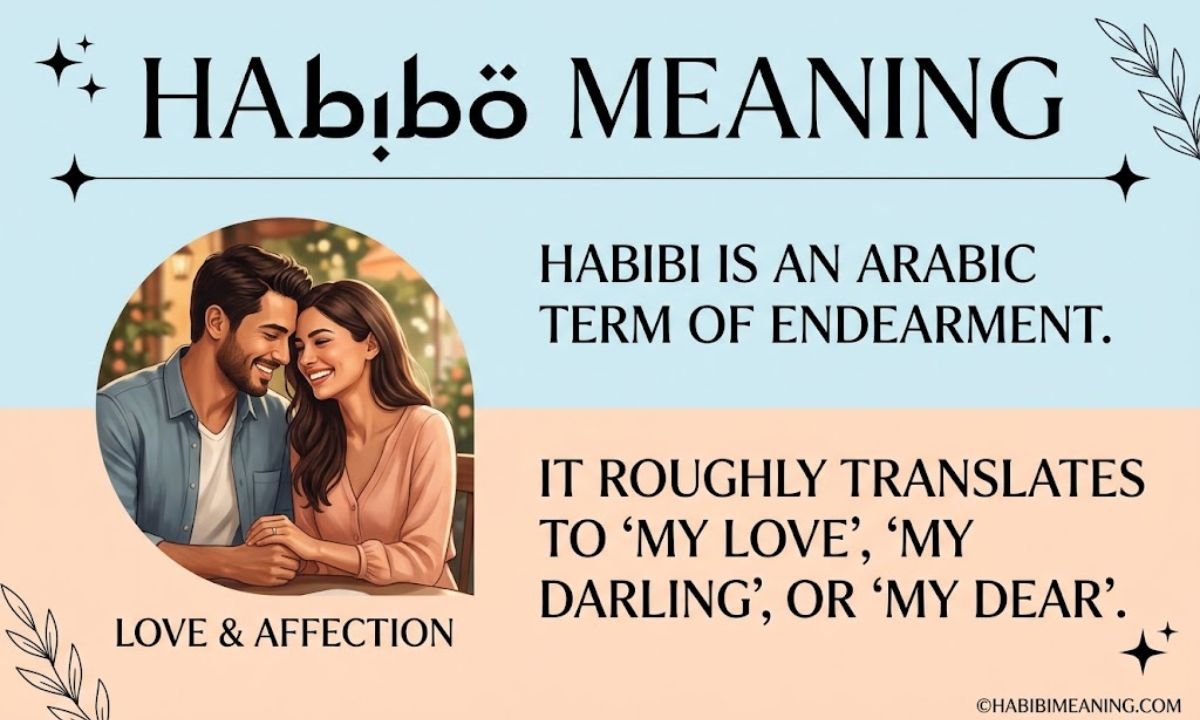
You’ve probably heard someone say “habibi” in a song, a movie, or a chat. It sounds sweet and warm. But do you really know what it means? The habibi meaning goes deeper than most people think. Let’s clear it up in simple words.
Many people think this word is only for lovers. That is not fully true. The habibi meaning changes with the person and the moment. Friends use it. Families use it. Even shopkeepers use it with a smile.
In 2026, this Arabic word is everywhere online. You see it in captions, reels, and comments. Some use it right, and some do not. Knowing the real habibi meaning helps you use it with care. Read on to find the surprising truth.
What Does “Habibi Meaning” Mean in Text?

In casual texting, habibi is an affectionate nickname. It translates to “my dear,” “my love,” or “my friend.” Most people send it the way they’d send “bro” or “buddy.” That’s the everyday habibi meaning in text.
Tone does the heavy lifting here. A message like “thanks habibi” from a teammate feels friendly. The same word after a late night compliment can feel romantic. So the habibi meaning in texting depends on who sends it and when.
Here’s a quick snapshot of what people usually intend:
- Friendly: “Relax habibi, we’ll fix it.”
- Romantic: “Miss you habibi.”
- Playful: “Habibi come to Dubai.”
- Attention grabber: “Habibi wait, look at this.”
If you’re stuck, check the relationship first. Close friends rarely mean anything deeper. Strangers on dating apps might. That one habit solves most habibi meaning in chat confusion.
Habibi Meaning to a Boy

When a girl or another guy says habibi to a boy, it usually means “my dear” or “my friend.” Between guys, it’s pure brotherly talk. Think of how some people say “bro” or “my guy.” There’s nothing romantic hiding in it.
In Arabic, habibi is the masculine form. So it’s the grammatically correct word for a male. A mother might call her son habibi all day long. That’s why the habibi meaning to a boy often feels warm and protective.
- Friend to friend: “Good game habibi.”
- Parent to son: “Eat something habibi.”
- Girlfriend to boyfriend: “Goodnight habibi.”
Habibi Meaning to a Girl
Here’s a twist. For a woman, the proper Arabic word is habibti. That’s the feminine version. But online, many people skip the grammar and say habibi to everyone. So the habibi meaning to a girl often comes from non Arabic speakers who simply like the sound.
If a guy calls a girl habibi, check the tone. It could be a sweet nickname. It could be flirting. It could also be a casual “hey friend.” Context, emojis, and timing give you the answer.
- Close friends: “Love you habibi.”
- Flirty chat: “You looked amazing today habibi.”
- Family: “Come here habibti.”
Habibi Meaning in Arabic

The word comes from the Arabic root h b b, which relates to love. Literally, habibi meaning in Arabic is “my beloved.” You’ll hear it across the Middle East and North Africa. Every region adds its own accent and rhythm.
Arabic speakers use it far beyond romance. They say it to friends, kids, shopkeepers, and even strangers. Often it appears as “ya habibi,” which works like “oh my dear.” So the habibi meaning in Arabic is warmer and more flexible than most English slang.
- “Ya habibi” means “oh my dear.”
- “Habibi” is for a male, “habibti” is for a female.
- Families, friends, and couples all use it.
- It’s common in songs, movies, and daily speech.
Habibi Meaning Friend
Many people use habibi the way they use “pal.” It’s an easy way to say “I like you, we’re cool.” That’s the habibi meaning friend version, and it’s the most common one online. Gamers, classmates, and coworkers who joke together all use it.
Picture this. You’re playing a match, and your teammate saves the round. You type “legend habibi.” Nobody thinks you’re flirting. You just showed love in a friendly conversation.
- “You coming tonight habibi?”
- “Don’t worry habibi, I got you.”
- “Best teammate habibi.”
Habibi Meaning in English
There’s no perfect one word match in English. The closest options are “my dear,” “darling,” “my love,” and “buddy.” So the habibi meaning in English shifts based on the situation. A romantic scene leans toward “darling.” A gaming lobby leans toward “bro.”
That flexibility explains why English speakers adopted it so fast. It sounds friendly and a little exotic. It also fills a gap, since English doesn’t have one warm word for both friends and partners. The habibi meaning in English is really “someone I care about.”
The Most Common Meanings of “Habibi”

The word looks simple, but online it carries many tones. Five uses cover almost every case. Knowing them takes the guesswork out of the habibi slang meaning you see in comments and DMs.
Think of habibi like a dimmer switch, not an on and off button. Friendly sits at one end. Romantic sits at the other. Sarcasm sneaks in somewhere in the middle.
1. Friendly Nickname
This is the most common use by far. People treat habibi as a friendly nickname, like “my guy” or “buddy.” The habibi friendly meaning shows up in sports chats, class groups, and family threads.
- “Relax habibi, we’ll fix it.”
- “Good game habibi.”
- “Come on habibi, let’s go.”
2. Romantic or Flirty
Couples use habibi like “babe” or “sweetheart.” The habibi romantic meaning gets stronger with heart emojis and soft messages. Late night timing adds extra weight too.
- “Goodnight habibi.”
- “Miss you habibi.”
- “Come here habibi.”
If you’re curious about the habibi meaning in relationships, watch how often it appears. Daily use between two people usually signals affection. A one time use in a group chat rarely does.
3. Playful Internet Slang
Online, habibi often works as a joke. Memes and short videos turned it into internet slang with a wink. Think of the viral “habibi come to Dubai” lines. Here, the word is comedy first, nickname second.
- “Habibi come to Dubai.”
- “Trust me habibi.”
- “Relax habibi, it’s fine.”
4. A Way to Get Attention
Some people say habibi to start a sentence. It works as a playful greeting or a verbal tap on the shoulder. The habibi meaning here is simply “hey, listen.”
- “Habibi listen.”
- “Habibi wait.”
- “Habibi check this out.”
5. Sarcastic Tone
Tone can flip any slang word. A sweet sounding habibi can turn sharp fast. In this case the sarcastic tone matters more than the word itself.
- “Sure habibi, whatever you say.”
- “Nice try habibi.”
When the sentence feels like a mic drop, expect sarcasm. A smiling emoji doesn’t always mean friendly, either.
How “Habibi” Is Used in Real Conversations
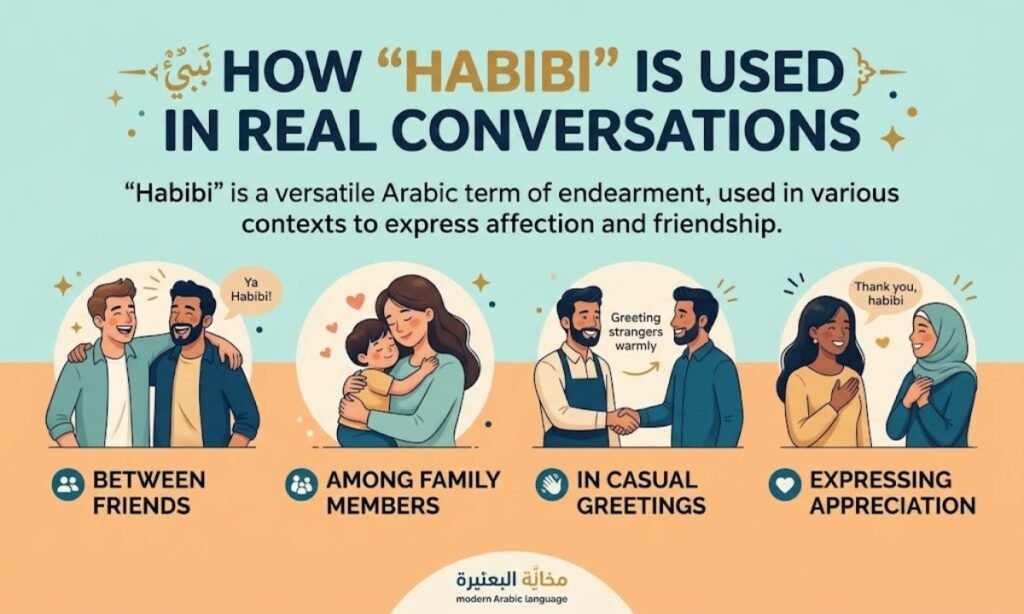
The habibi meaning in online conversations changes with each platform. Every app has its own culture. A word that’s cute on Snapchat may feel odd in a work email. Let’s walk through the main places you’ll see it.
Learn the room first. Then the word becomes easy to read. It’s like knowing when a joke fits.
Friends & Casual Texting
Among friends, habibi means buddy. Nobody overthinks it. It slips into casual texting the way “bro” does.
Friend 1: “You coming tonight?”
Friend 2: “Of course habibi.”
That small exchange shows trust. It also shows comfort, which is the real point of the habibi meaning in chat.
Instagram & Snapchat
The habibi meaning on Instagram often appears in social media comments. Fans write “Legend habibi” under a creator’s post. Influencers reply with “Stay strong habibi” to sound close to their audience.
The habibi meaning on Snapchat leans more personal. In Snapchat conversations, it often flows between close friends or couples. Streaks, inside jokes, and late replies all shape the tone.
- “Looking good habibi” in a comment.
- “Let’s go habibi” under a gym clip.
- “Stay strong habibi” in an Instagram caption.
Dating Apps
On dating apps, habibi leans flirty. People use it like “babe” or “sweetheart.” The habibi romantic meaning gets obvious when it follows a compliment.
- “Good morning habibi.”
- “You look amazing habibi.”
- “So when are we meeting habibi?”
A word of caution though. If you’ve only matched five minutes ago, it can feel too fast. Some people love it. Others roll their eyes.
Gaming & Online Communities
Gamers use habibi in voice chat and text chat. It becomes a team nickname almost instantly. The habibi meaning on TikTok and in streams works the same way, since online communities love shared slang.
- “Nice shot habibi.”
- “Carry us habibi.”
- “Let’s push habibi.”
Romance almost never appears here. Teammates just want a fun, low pressure way to hype each other.
Work or Professional Chat
At work, habibi is risky. Some close coworkers joke with it, but that’s rare. In formal work messages, it can sound too casual.
If your team already jokes this way, fine. Otherwise stick to names. Professional communication works best with clear, neutral words.
Habibi Meaning on TikTok
The habibi meaning on TikTok blends humor, accents, and trends. Creators say it as a punchline or a friendly greeting. Comment sections also use it as quick praise.
Since TikTok videos spread across cultures, the word gets used by people everywhere. That’s why the habibi meaning on TikTok feels more playful than serious. Most of the time, nobody means romance.
- Used as a joke in skits.
- Used as praise in comments.
- Used as a greeting in duets and replies.
Is “Habibi” Rude, Flirty, or Offensive?

The word itself isn’t rude. It literally means “my beloved.” But tone and setting can change how it lands. So when people ask “is habibi rude or flirty,” the honest answer is “it depends.”
Think about how you’d feel if a stranger called you “sweetheart.” It could be cute. It could be annoying. Habibi works the same way.
When It Feels Positive
It feels warm when friends, couples, or family use it. Relaxed chats help too. A simple “thank you habibi” feels kind.
- Friends joking around.
- Couples sharing affection.
- Parents talking to kids.
- Casual, relaxed conversations.
When It Feels Flirty
It sounds flirty with compliments, heart emojis, and late night texts. Romantic chats push it even further.
- “Miss you habibi.”
- “You’re such a sweet habibi.”
- “Thinking of you habibi.”
That’s when the habibi romantic meaning takes over. Most people sense it right away.
When It Feels Annoying
It gets annoying when someone overuses it. Fake tone and strangers who push it too hard make it worse. Think “listen habibi, I told you.”
Repeating it in every sentence also sounds forced. A little goes a long way.
When It Could Feel Offensive
Rarely, it can feel disrespectful. This happens when someone uses it mockingly, in an argument, or with a sarcastic tone. For example, “Relax habibi, you don’t know anything” sounds condescending.
Some Arabic speakers also dislike hearing it used as a cheap joke by strangers. Respect and cultural context matter, so read the room.
Is Habibi Romantic or Friendly?
Both. That’s the honest answer. The habibi meaning depends on who says it and how. Friends use it as a friendly nickname, while partners use it as a romantic nickname.
Here’s a quick way to tell:
- Friendly clues: group chats, jokes, gaming, casual replies.
- Romantic clues: private chats, heart emojis, compliments, late night timing.
- Sarcastic clues: short, cold sentences and eye roll emojis.
Still not sure? Ask directly or reply neutrally. That keeps things easy.
What Is the Difference Between Habibi and Babe?
Both are affectionate nicknames, but they aren’t identical. “Babe” almost always points to a couple. Habibi covers a wider range, including friends and family.
So the habibi meaning is broader than “babe.” Habibi can be platonic. Babe usually can’t, unless friends joke around. That’s the main difference.
- Babe: romantic, flirty, relationship focused.
- Habibi: friendly, romantic, family warm, or playful.
How to Respond When Someone Says “Habibi”
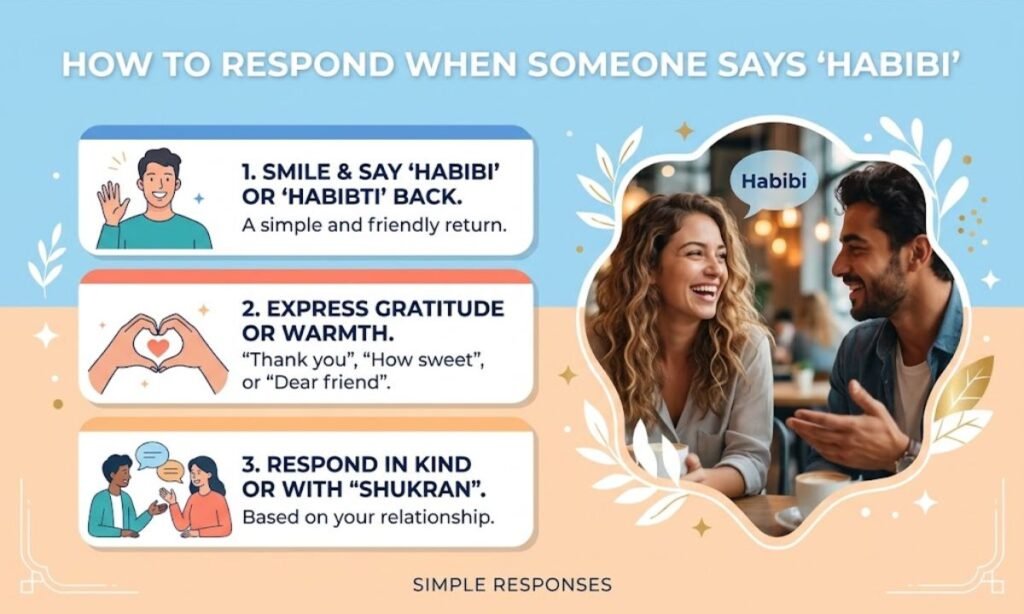
You don’t need a clever reply. Just match the tone. If it’s friendly, answer friendly. If it’s flirty and you like it, play along. That’s the smartest way to handle how to respond to habibi moments.
If you’re unsure, stay neutral until you read the vibe. No one gets offended by a calm “thanks.”
Casual Replies
Simple replies keep chats smooth. They work for friends and teammates.
- “Thanks habibi.”
- “You too habibi.”
- “Appreciate it habibi.”
Funny Replies
Humor works great among friends. Use it when you know the other person’s style.
- “Calm down habibi.”
- “Okay boss habibi.”
- “Relax habibi, I know.”
Neutral Replies
When you can’t read the tone, stay simple. These neutral replies protect you from awkward moments.
- “Got it.”
- “Thanks.”
- “Alright.”
You don’t need to repeat the nickname.
Professional Replies
At work, skip the slang. Keep it short and polite.
- “Thank you.”
- “I understand.”
- “Appreciate the message.”
This keeps your professional communication clean and respectful.
Also read these meanings on MYH Meaning in Text: The Surprising Truth Behind This Popular Slang in 2026
When to Use Habibi (And When Not To)
Use it with friends who joke this way. Use it with a partner who likes affectionate names. Use it when the chat is relaxed and the tone is clear. That’s the safest answer to “when to use habibi.”
However, if you’re not sure someone’s comfortable, hold back. Ask yourself one question: “Would I say this out loud to them?” If yes, go ahead.
- Good for close friends, couples and relationships, and teammates.
- Fine for family members who share the culture.
- Risky with strangers, bosses, or formal contacts.
Common Misunderstandings About “Habibi”
Many people get the habibi meaning slightly wrong. These myths show up again and again. Clearing them up saves you from awkward moments.
Thinking It Always Means “Love”
Yes, “love” is part of the translation. But most of the time, it just means friend or buddy. People say it all day without any romance involved.
Thinking It’s Only for Couples
That’s not true. Friends, teammates, family members, and creators use it too. Romantic use is only one version of the habibi meaning.
- Friends
- Teammates
- Family members
- Internet creators
Confusing Tone
Tone causes the most trouble. “Relax habibi” could be friendly, sarcastic, or teasing. Only context decides.
Assuming It’s Always Cultural
Many internet users have no Arabic background. They simply picked it up online. So the word now belongs to global internet culture, even though its roots are Arabic.
Still, it’s kind to remember where it comes from. Using it respectfully keeps the habibi meaning warm instead of mocking.
Similar Slang Terms You Should Know
If you see habibi online, you’ll also meet similar words. Each one carries a slightly different feel. Together, they make up the similar slang terms to habibi you’ll bump into daily.
- Bro: a common way to address a friend.
- Fam: short for family, used for close friends.
- My guy: a friendly nickname for a buddy.
- Bestie: a playful term for a best friend.
- Babe: a romantic nickname in relationships.
- Buddy: a casual, friendly way to address someone.
- Boss: respect or joking praise.
- King: used online to hype someone up.
- Legend: a compliment for someone impressive.
- Homie: slang for a close friend.
- Mate: a friendly term common in casual conversation.
None of these carry the same cultural depth as habibi. But they play similar roles in everyday chats.
When You Should Avoid Using “Habibi”
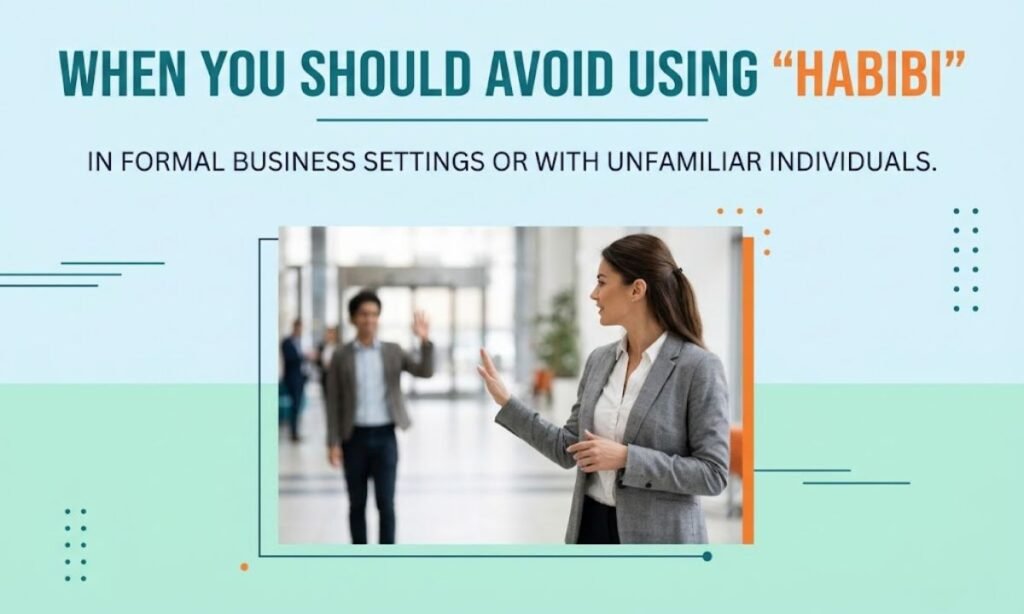
Even a friendly word has limits. Some moments call for plain language. Knowing them protects your reputation and your relationships. It also keeps the habibi meaning from getting twisted.
Professional Settings
In work emails, habibi can sound unprofessional. For example, “Good morning habibi, please review the report” feels off. Say “Good morning” instead.
Cross-Cultural Conversations
Some people won’t know the slang. They might feel confused or even uneasy. Clear language works better in cross-cultural conversations.
Also remember that native Arabic speakers may hear it differently. They know the real habibi meaning in Arabic, and it’s heavier than internet slang.
Sensitive Situations
During serious talks, slang can feel disrespectful. Avoid it in these cases:
- Conflict discussions
- Serious work meetings
- Formal messages
- Apologies or bad news
Neutral language wins every time here.
Quick Tips Before You Use Habibi
Before you send it, run a fast check. These tips come from watching how people react in real chats. They’ll save you from most awkward replies.
- Read the other person’s tone first.
- Use it only if the chat already feels relaxed.
- Skip it with people you barely know.
- Don’t pair it with sarcasm unless you’re sure they’ll laugh.
- If you’re not Arab, use it with care and respect.
Small steps like these protect the habibi meaning you want to share.
Conclusion
Habibi meaning is simple and sweet. It means “my love” or “my dear” in Arabic. People use it for family, friends, and partners. The word carries warmth in every sound. Now you know the real habibi meaning behind the trend.
You can use this word with confidence now. Just keep the tone and the person in mind. A kind habibi meaning always feels better when it comes from the heart. Small words can build strong bonds. So say it with care, and let habibi meaning bring a little more love into your day.
FAQs
Is habibi for male or females?
Habibi is the masculine form, used when speaking to a man or boy, while the feminine form is “habibi.” In casual use, though, many people say “habibi” to anyone.
What does habibi mean to a guy?
To a guy, it means “my love” or “my dear,” but it’s usually a warm, friendly term between friends, family, or partners. Between male friends, it’s just an affectionate way of saying “buddy” or “bro.”
Is Habibi flirty?
It can be, depending on tone and context, especially between people who are dating or interested in each other. Most of the time, though, it’s a platonic, friendly term and not romantic.
Why do Muslims say habibi?
Habibi is an Arabic word, not a religious one, so it’s used by Arabic speakers of all faiths, including Christians and Jews. Many Muslims use it simply because Arabic is their everyday language, and it expresses warmth and affection.
What Does Habibi Mean?
Habibi is an Arabic word that means “my love” or “my darling.” People also use it as a warm way to say “my friend” or “dear.”
Is Habibi a Romantic Word?
Not always. Couples use it for love, but friends, family, and even shopkeepers say it too. The tone and context decide the meaning.
What Is the Difference Between Habibi and Habibti?
Habibi is for a male, and habibti is for a female. Both mean “my beloved,” and the only difference is who you are talking to.
How Do You Respond to Habibi?
You can smile and say “shukran,” which means “thank you.” You can also say “habibi” back, or “ya habibi,” to return the warmth.
1 thought on “Habibi Meaning: The Surprising Truth Behind This Popular Arabic Word in 2026”